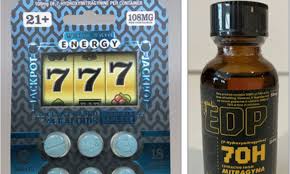
If you've started seeing headlines about a 7-OH ban, you're not imagining the sudden attention. This is a live, fast-moving story, and the details matter if someone in your life is using these products.
Here's what 7-OH actually is, where things stand as of this writing in July 2026, and what it means for families.
What Is 7-OH
7-hydroxymitragynine, shortened to 7-OH, is a compound found in trace amounts in the kratom plant. In its natural leaf form, kratom contains very little of it. The products drawing regulatory attention now are different: concentrated, extracted, or synthetically enhanced 7-OH sold as tablets, gummies, drink shots, and powders, often marketed for pain relief or mood.
Health officials describe these concentrated products as behaving like a potent opioid, with a risk profile closer to fentanyl than a botanical supplement. That's the core of why this is moving through federal scheduling so quickly.
Where the Ban Actually Stands Right Now
This part matters because a lot of what's circulating online overstates where things are. Concentrated 7-OH is not federally banned yet. Here's the actual timeline:
- July 1, 2026: The DEA filed notices of intent to temporarily place concentrated 7-OH, along with three related synthetic compounds, into Schedule I of the Controlled Substances Act.
- July 6, 2026: Those notices were formally published in the Federal Register, along with a public comment period opened by HHS.
- July 31, 2026: The public comment period is scheduled to close.
- On or after August 5, 2026: The DEA can issue the actual temporary scheduling order. Once it does, the ban takes effect immediately on the date it's published.
Once issued, the temporary order would last two years, with a possible one-year extension if a permanent scheduling process is still underway. Separately, a bill called the END 7-OH Act was introduced in Congress in March 2026, which would address this through legislation rather than DEA scheduling authority.
Several states, including Tennessee, have already banned 7-OH under their own laws, so the federal timeline isn't the whole picture depending on where you live.
What Changes Once It's Scheduled
Once concentrated 7-OH is placed in Schedule I federally, it gets treated legally the same way as heroin or LSD. That means:
- Manufacturing, distributing, selling, or possessing it becomes a federal crime
- Products currently sold openly in gas stations, smoke shops, and online will need to disappear from the legal market
- Retailers who don't comply face criminal, civil, and administrative penalties
- The threshold specifically targets concentrated and synthetic forms, not traditional whole-leaf kratom, so the two shouldn't be confused
Why This Matters for Families
If someone you love has been using 7-OH regularly, the legal status matters less right now than the physical reality. Regular use of a potent opioid-like substance can lead to dependence, and dependence means withdrawal when access stops, whether that's because of a federal ban, a state law, or a retailer simply pulling the product.
A sudden change in legal supply doesn't make dependence disappear. It can actually create a more urgent situation if someone who's been using daily suddenly can't access what their body has adjusted to. There's a pattern worth naming directly here. When a substance someone depends on becomes harder to find, some people don't stop, they look for something else to avoid withdrawal, and what's available as a substitute is often less predictable and more dangerous than what they were using before. That's a real risk with this particular transition.
This is a case where waiting to see what happens with the ban isn't a plan. Getting your loved one into treatment before a supply disruption forces that kind of decision gives them a safer path than searching for a replacement once 7-OH gets harder to find.
If You're Worried About Someone You Love
A few things worth knowing if 7-OH use is part of what you're dealing with in your family right now:
- Regular use, especially of concentrated products, can involve real physical dependence, similar to what's seen with other opioids
- Animal research shows 7-OH produces dose-dependent respiratory depression similar to classical opioids, and public health departments have linked it to fatal overdoses, particularly at high doses or when combined with alcohol or other sedatives
- If you ever witness someone unresponsive with slow or absent breathing, call 911 immediately. Naloxone, the medication used to reverse opioid overdoses, has reversed 7-OH's respiratory effects in the research available so far, so if it's on hand, it's worth knowing how to use it
- Treatment centers vary in how familiar they are with 7-OH specifically. Our Medical Detox by Substance guide covers what a proper kratom and 7-OH detox protocol should include, and gives you the exact question to ask a facility to find out if they actually know what they're doing
You Don't Have to Figure This Out Alone
The legal status of 7-OH is changing fast, but your loved one's situation doesn't have to wait on a federal timeline. If you're trying to understand what you're dealing with, or you need help finding a treatment option that actually knows how to handle this, I can walk through it with you. Book a consultation here.