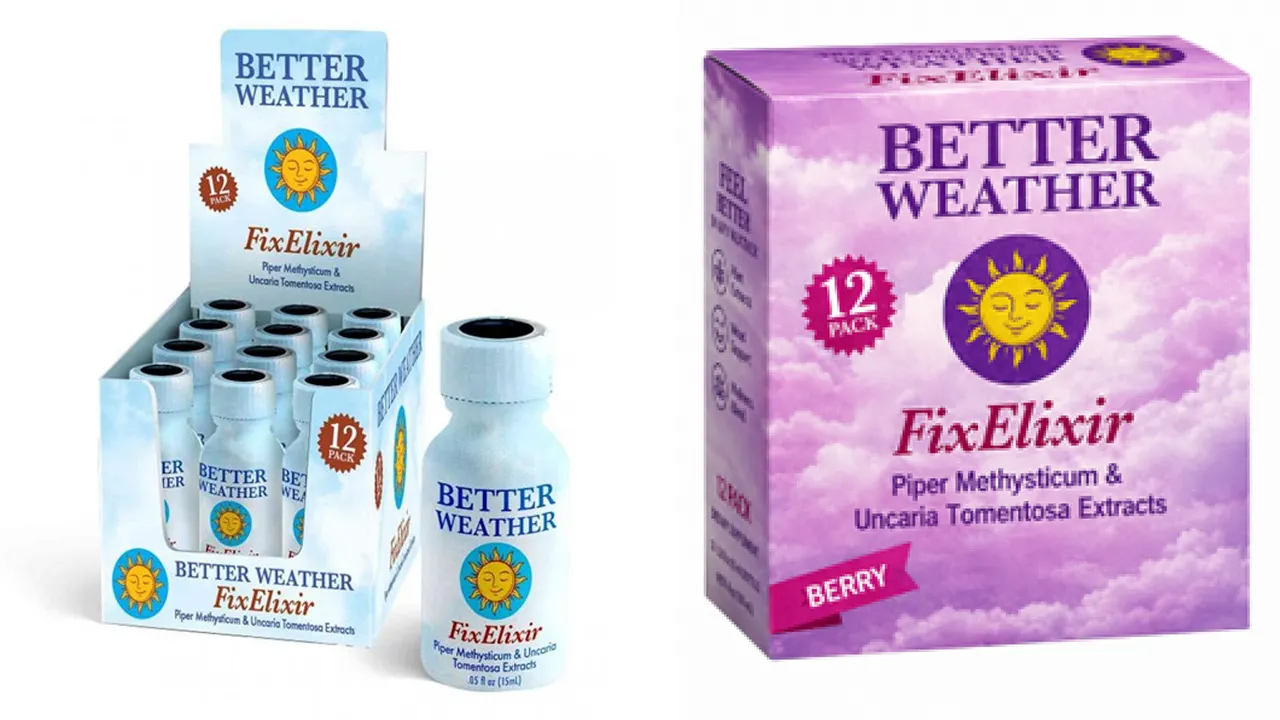
If you have walked into a gas station or smoke shop in Baldwin or Mobile County recently, you have probably walked past these products without noticing them. Small liquid shots in bright packaging, sold near the register, marketed for relaxation or pain relief. The labels name botanicals most people have never heard of. None of them say kratom.
Alabama's Attorney General had them tested. Kratom is what came back.
Here is what that means, why it matters more in this state than most, and why the people getting hurt by these products usually had no idea what they were taking.
What the State Actually Found
In March 2026, the Alabama Attorney General's Office issued a statewide cease-and-desist order aimed at businesses selling products containing mitragynine or hydroxymitragynine, the active compounds in kratom.
The state's warning to consumers was direct: labels on these products may not fully disclose what is in them, which means someone can buy one at a gas station and unknowingly end up in possession of a controlled substance.
Better Weather drew federal attention as well. In May 2026, the FDA posted a recall covering roughly 448 boxes of Better Weather Fix Elixir, all flavors and variations, for containing undeclared mitragynine and mitragynine pseudoindoxyl, a more potent derivative. The products had been sold online between November 2025 and March 2026.
Read the Label and You Will See the Whole Strategy
The Better Weather packaging lists its contents plainly on the front: Piper methysticum and Uncaria tomentosa extracts.
Those are the botanical names for kava and cat's claw. Two legitimate herbal products, printed right there in small type. A shopper who bothers to look them up finds two plants with long histories of traditional use and no reputation for producing an opioid effect.
Then a laboratory tests the bottle and finds kratom alkaloids.
That combination, real botanical names on the front and undisclosed kratom inside, is the pattern showing up across this entire product category. Understanding why those two plants specifically is worth a minute of your time, because it explains why banning a product name accomplishes so little.
Kava and Kratom Are Not the Same Plant
Kava comes from Piper methysticum, used in the South Pacific for centuries. It is legal, genuinely different from kratom, and legitimate kava products exist.
Kratom comes from Mitragyna speciosa, a completely different plant. Its active compounds bind to opioid receptors and produce opioid-like effects.
The problem is not that kava is secretly dangerous. The problem is that products sold under kava branding have been lab-tested and found to contain kratom. Boujee Bliss, one of the products Alabama named, is sold as a kava extract shot in flavors like berry, grape, and strawberry banana.
Cat's Claw Is the Newer Version, and It Has Already Killed Someone
Cat's claw, Uncaria tomentosa, is a woody vine from the Amazon sold as an herbal supplement for joint pain and inflammation. On its own it produces no opioid effects at all.
It has become the label of choice for this product category, and the consequences have already been fatal.
That last point deserves emphasis. Nobody catches these products by reading labels. They get caught after someone is hospitalized.
Why Cat's Claw Specifically
This is not a random label swap, and understanding the logic tells you why this problem will keep repeating.
Cat's claw and kratom are distantly related botanically. Uncaria and Mitragyna both belong to the Rubiaceae family, which is a real taxonomic relationship but a distant one. Rubiaceae also includes coffee and gardenia. Sharing a family says nothing about sharing chemistry, and real Uncaria tomentosa does not contain mitragynine or 7-OH.
What that distant relationship provides is cover. Certain minor alkaloids occur naturally across both the Uncaria genus and kratom, and some of them are opioid-active. Federal scheduling actions name specific compounds. A product formulated around a compound that is not on that list can produce opioid effects, produce dependence, and still sit outside the language of the scheduling order.
The result is a label that is not an obvious lie, a product that does something to the customer, and a regulatory position that is defensible on paper. That is a considerably more sophisticated arrangement than simply relabeling kratom.
In Alabama, This Is a Schedule I Controlled Substance
Most states treat kratom as an unregulated supplement. Alabama does not, and has not since 2016.
Mitragynine and 7-hydroxymitragynine are Schedule I controlled substances under Alabama law. That is the same legal category as heroin. Possessing them is a crime here, whether or not the person knew what was in the bottle they bought at a convenience store.
The state's chief of the State Bureau of Investigation described these products as dangerous and highly addictive during a June press conference, and noted the Schedule I classification.
That gap, between a product sold openly at a register and a felony-level controlled substance, is where people are getting caught.
Researchers at the University of Alabama at Birmingham found a related version of the same problem. Testing of retail products found that items labeled as Mitragyna hirsuta and Mitragyna javanica contained mitragynine, an alkaloid found only in Mitragyna speciosa, contradicting their labeling.
The People I See Getting Hurt by This
In my work, the pattern that keeps showing up is people on drug court supervision failing drug screens after using these products.
Think through what that means. Someone in drug court is doing exactly what the system asked of them. They are staying away from illicit substances. They buy something sold legally at a gas station, marketed as a kava or cat's claw wellness shot, with no kratom listed anywhere on the label. Then they test positive for mitragynine.
At that point they are facing sanctions, and in some cases jail, for a product they purchased over the counter. Explaining that the label did not disclose the ingredient is a difficult argument to make after the fact, and it is not one most people are equipped to make in front of a judge.
The state's warning about unknowing possession is accurate. It just arrives too late for someone who already failed a screen.
This is not limited to drug court. Anyone subject to drug testing through employment, probation, parole, a treatment program, or a custody arrangement faces the same exposure.
The Withdrawal Is Worse Than People Expect
This is where the concentrated shot and tablet format matters, and it is the part families and users both tend to underestimate.
Traditional kratom leaf withdrawal is real but generally manageable. When clinical case reports and standardized opioid withdrawal scales have been applied to leaf kratom, it has presented as mild to moderate withdrawal of relatively short duration, with symptoms including cravings, anxiety, depression, fatigue, sleep disturbances, and body aches.
Concentrated extracts are a different situation. Extract products are more potent, which increases the risk of tolerance and dependence compared to whole leaf products. Commercial extracts may contain enriched or semi-synthetic 7-OH, producing substantially greater mu-opioid receptor potency, higher dependence risk, and more severe withdrawal presentations than the leaf.
Every product named in this article is a concentrated extract, not leaf.
The practical picture is someone who believed they were taking a wellness supplement going into something that looks clinically like opioid withdrawal. Nausea, diarrhea, abdominal cramping, restlessness, chills, sweating, severe body aches, insomnia, and anxiety. It is assessed using the same clinical scales used for opioid withdrawal, because functionally that is what it is.
Two things make this harder than ordinary opioid withdrawal to handle well.
The person often does not know what they are withdrawing from. They know they stopped taking a gas station shot. They may not connect that to why they feel like they have the flu and cannot sleep, and they usually cannot tell a clinician what compound or concentration they were taking, because the label never said.
It does not show up on a standard workup. A clinician looking for a cause will run a urine screen, find nothing they expect, and may look at everything else before landing on this. That delay costs time when someone is in acute withdrawal.
If someone in your family has been using these products daily and is talking about stopping, that is a conversation worth having with a medical provider rather than something to white-knuckle alone.
What Enforcement Has Actually Done
The state has moved aggressively, and the sequence is worth understanding.
March 2026: The Attorney General's office issues the statewide cease-and-desist naming Boujee Bliss, Better Weather, and Happy Hour, and coordinates with local district attorneys and law enforcement to pull these products from the market.
The counties covered were Covington, Jefferson, Lauderdale, Lowndes, and Montgomery.
Baldwin and Mobile counties were not part of that operation. I have continued to see products in this category on shelves in smoke shops and gas stations in both counties, including brands like Good Day and X Strike sold in the same coolers and counter displays as the products the state named.
The state's chief counsel acknowledged during the press conference that some store owners genuinely did not know what they were selling, and that the products remain available in some locations.
Why This Keeps Happening
Enforcement in this market produces relabeling rather than disappearance.
Name a product and the response is a new name, new packaging, and a new front-of-label botanical. The kava era gave way to the cat's claw era in a matter of months. The compound inside does not necessarily change, and sometimes it changes just enough to fall outside whatever was most recently scheduled.
This is the same dynamic playing out federally with 7-OH, where the FDA has warned that products may not be clearly or accurately labeled as to their 7-OH content and are sometimes disguised or marketed as kratom. I wrote about that federal scheduling process and where it stands in a separate piece on 7-OH.
The practical consequence for families is that a list of banned product names has a short shelf life. The category is what matters, not the brand.
What to Look For
These products share recognizable characteristics regardless of what they are called:
- Small liquid shots, usually 15 to 30 milliliters, or small tablets, sold at gas stations, smoke shops, and convenience stores
- Marketed for relaxation, mood, energy, focus, or pain relief
- Botanical names on the label like Piper methysticum, Uncaria tomentosa, kava, or cat's claw
- Other front-of-label language like botanical, plant-based, alkaloid blend, or proprietary blend
- Sold near the register rather than with actual supplements
- No age verification required at purchase
- Claims of being kratom-free or 7-OH-free, which lab testing in multiple states has shown cannot be taken at face value
Common Questions
Does Boujee Bliss have kratom in it?
Alabama's Attorney General had Boujee Bliss tested by an internationally accredited laboratory and reported that it contained kratom, despite kratom not being listed among the active ingredients. It is sold as a kava extract shot. Alabama named it in a statewide cease-and-desist order in March 2026.
Does Better Weather have kratom in it?
Better Weather was named in the same Alabama cease-and-desist order after lab testing confirmed kratom content. The label lists Piper methysticum and Uncaria tomentosa extracts, which are kava and cat's claw. Separately, in May 2026 the FDA posted a recall of Better Weather Fix Elixir products for containing undeclared mitragynine and mitragynine pseudoindoxyl.
Are cat's claw tablets safe?
Genuine cat's claw, Uncaria tomentosa, is an herbal supplement with no expected opioid effects. The problem is products sold under that name that contain something else. In July 2026, Utah linked Buzzers-brand Cat's Claw tablets to a death and several severe health incidents after testing found kratom-derived opioid compounds. Utah's poison control center advised avoiding cat's claw and kava products purchased at smoke shops.
Will these products make you fail a drug test?
They can. Kratom's active compound is mitragynine, and standard drug panels do not always include it, but many probation, drug court, and treatment program panels do specifically test for it. If a panel screens for mitragynine and you have used one of these products, it can produce a positive result even though the label never mentioned kratom.
Is kratom legal in Alabama?
No. Mitragynine and 7-hydroxymitragynine have been Schedule I controlled substances under Alabama law since 2016, which is the same classification as heroin. Possession is a crime in this state regardless of whether the product was purchased legally at a store.
What should I do if I already took one of these?
If you are subject to drug testing through probation, drug court, employment, or a treatment program, tell whoever supervises your testing before a screen comes back positive rather than after. Bring the product or a photo of the label. If you have been using these daily for a while and are considering stopping, talk to a medical provider about the withdrawal rather than stopping abruptly on your own.
If Someone You Love Is Using These
A few things worth understanding.
Most people do not know they are dependent on an opioid-like substance. They believe they are using a supplement. That framing makes it harder to recognize the problem and harder to ask for help.
Treatment centers vary widely in their familiarity with this. Kratom and its derivatives have become more common in detox admissions, and not every facility has current knowledge of how to manage that withdrawal. Our Medical Detox by Substance guide covers what a proper protocol should include and what to ask a facility directly.
If drug testing is part of someone's situation, this is urgent. Anyone on probation, in drug court, in a treatment program, or subject to employment testing needs to know that these products can produce a positive result even when the label does not mention kratom.
You Do Not Have to Figure This Out Alone
If someone in your family is using these products and you are trying to work out whether it has become a dependence, or you are looking for a facility that actually understands how to treat it, that is the kind of situation I help families think through.